Why Sustainable Garment Labels Matter in Apparel Sourcing
Brands and buying houses increasingly ask suppliers to document the materials and processes used throughout a product. A garment label is a small component, but its fiber, print method, durability and end-of-life instructions should still align with the product brief. For manufacturers and exporters in Tirupur, Bangalore and other Indian textile hubs, setting these requirements early helps avoid last-minute substitutions and unsupported sustainability claims.
Start by defining what the buyer means by “sustainable”: recycled content, a preferred fiber, chemical restrictions, traceability, reduced packaging or a specific certification. These are different requirements and may need different evidence.
Compare Eco-Friendly Garment Label Materials
Printed labels are commonly made from polyester satin or taffeta. If a buyer requests recycled content, ask whether a recycled polyester option is available for the exact label construction and whether the supplier can provide traceability or certification documents for that material. Do not assume that a fabric’s appearance proves its recycled content.
Recycled content is not the same as recyclability. A small sewn-in label made from a different fiber, combined with thread, ink and a mixed-fiber garment, may not be recoverable in the garment’s recycling stream. Follow the brand’s material specification and disposal guidance rather than promising that a label is recyclable without evidence.
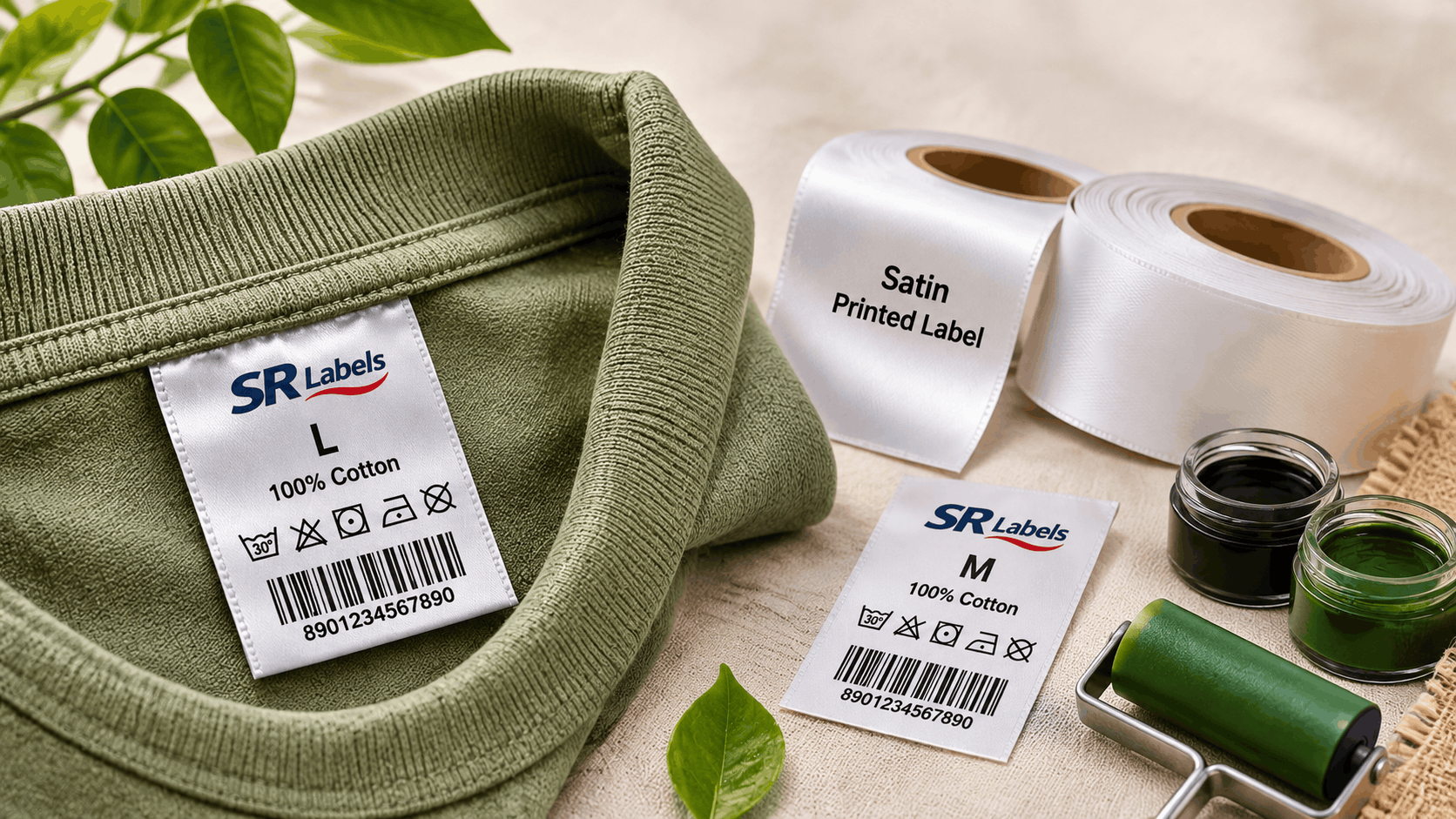
Compare the candidate substrate with the label’s job. A care label may need fine text, symbols and repeated-laundering resistance; a brand label may prioritize hand-feel, color and presentation. Review the existing taffeta label guide and satin printed label guide when comparing those print surfaces and use cases.
Ask About Lower-Impact Label Inks and Printing
Ink claims should be specific to the print process, substrate, color range and destination market. Water-based or other lower-impact ink systems may be suitable for some jobs, but the name of an ink category alone does not establish that the finished label meets a buyer’s chemical, safety or environmental standard.
- Share the customer’s restricted-substance list and required compliance documents before sampling.
- Ask which ink system is proposed and what evidence is available for the finished printed label.
- Check that the requested colors, small text and care symbols reproduce clearly on the selected substrate.
- Confirm that the print remains legible after the laundering or wear tests specified by the buyer.
For export care information, keep symbol artwork and wording aligned with the garment and buyer requirements; see our wash care label and export compliance guide.
Balance Label Durability, Cost and Material Choice
A label that fades, cracks or becomes unreadable early may need replacement and can undermine the product’s service life. Compare samples after the intended wash and care conditions, rather than choosing a substrate or ink based on a general “green” label claim. Specify the test procedure and acceptance criteria with your customer; requirements vary by product and market.
For bulk garment production, assess the total requirement: label size, print coverage, order volume, attachment method, expected care cycle and documentation. A suitable standard construction may meet the brief more reliably than an alternative material that has not been validated for that garment.
Sustainable Label Supplier Checklist for Exporters
- Write down the buyer’s exact material, recycled-content, chemical and certification requirements.
- Request supporting documents tied to the specific substrate and production lot, where applicable.
- Approve a printed sample for readability, color, hand-feel and garment compatibility.
- Test the sample using the buyer’s laundering or performance protocol.
- Confirm label composition and approved claims before publishing product or packaging statements.
Keep approved specifications and sample references with the purchase order so repeat runs can be checked against the same requirements. If a claim cannot be substantiated for the finished label, describe the verified attribute precisely instead of making a broad environmental claim.
Request Sustainable Garment Label Samples
SR Labels works with apparel manufacturers, fashion brands and exporters to discuss custom satin, taffeta and other printed label requirements. Share your target material, buyer specification, artwork, quantity and testing needs so the team can review a suitable sample option with you.
Planning Labels for a Responsible Apparel Range?
Send your sustainability criteria and label brief to discuss material options, samples and a production quote.